
What to Expect at Your First Therapeutic Massage Appointment in Bar Harbor, Maine
If your doctor or physical therapist recommended massage therapy, you might be feeling a little unsure about what that actually means.
Maybe you’ve never had a massage before.
Maybe you have — but only in a relaxation setting, and this feels different.
If you’re coming in for an injury, post-surgical recovery, or chronic pain, it is different.
A therapeutic massage session is focused, collaborative, and specific to your body and your goals. It’s not about “just relaxing.” It’s about understanding what’s happening in your body and helping you move forward safely.
Here’s what you can expect when you come to Maine Seastone Studios in Bar Harbor for a therapeutic massage with me.

A Comprehensive Evaluation: Understanding the Root Cause of Pain
We don’t start on the table.
We start with a conversation.
You’ll be asked about:
Your current symptoms
When and how the injury occurred
Surgical history, if applicable
Recommendations from your doctor or PT
Sleep, stress, and activity levels
Your work environment and daily movement patterns
This helps me see the full picture. Pain is rarely just one isolated spot. It’s often influenced by how you move, how you sit, how you sleep, and how your body compensated after injury or surgery. The goal is not just to treat where it hurts. It’s to understand why it hurts.
Movement Assessment and Posture Evaluation
Depending on your concern, we may look at how you move before any hands-on work begins.
This might include:
Observing posture
Watching you walk
Simple range-of-motion testing
Checking joint mobility
Noticing muscle imbalances
Assessing balance or coordination
This is not a fitness test. It’s information gathering. It allows us to identify stiffness, weakness, compensation patterns, or restrictions that may be contributing to your pain.
Targeted, Therapeutic Hands-On Treatment
Once we’ve identified priorities, you’ll get on the table for hands-on work.
Therapeutic massage for injury or post-operative recovery is intentional and specific. You may feel:
Sustained pressure
Slow stretching
Focused work along a scar or restricted area
Gentle joint mobilization
Fascial techniques
The work is adapted to your tolerance and medical history. This is not aggressive bodywork. And it’s not meant to be endured.
Communication During Your Massage Session
Clear communication is essential. You are encouraged to speak up at any time.
Massage therapy should not be severely painful. Some mild discomfort can happen when working through tight or restricted tissue. Many clients describe it as “productive” or “intense but manageable.” It should never feel overwhelming. You are always in control of pressure, pacing, and whether we continue a technique.
If you’ve never had massage before, this can feel vulnerable. That’s normal. My role is to create a professional, respectful, and collaborative environment so you feel safe asking questions and communicating what you need.
Is It Normal to Feel Sore After Therapeutic Massage?
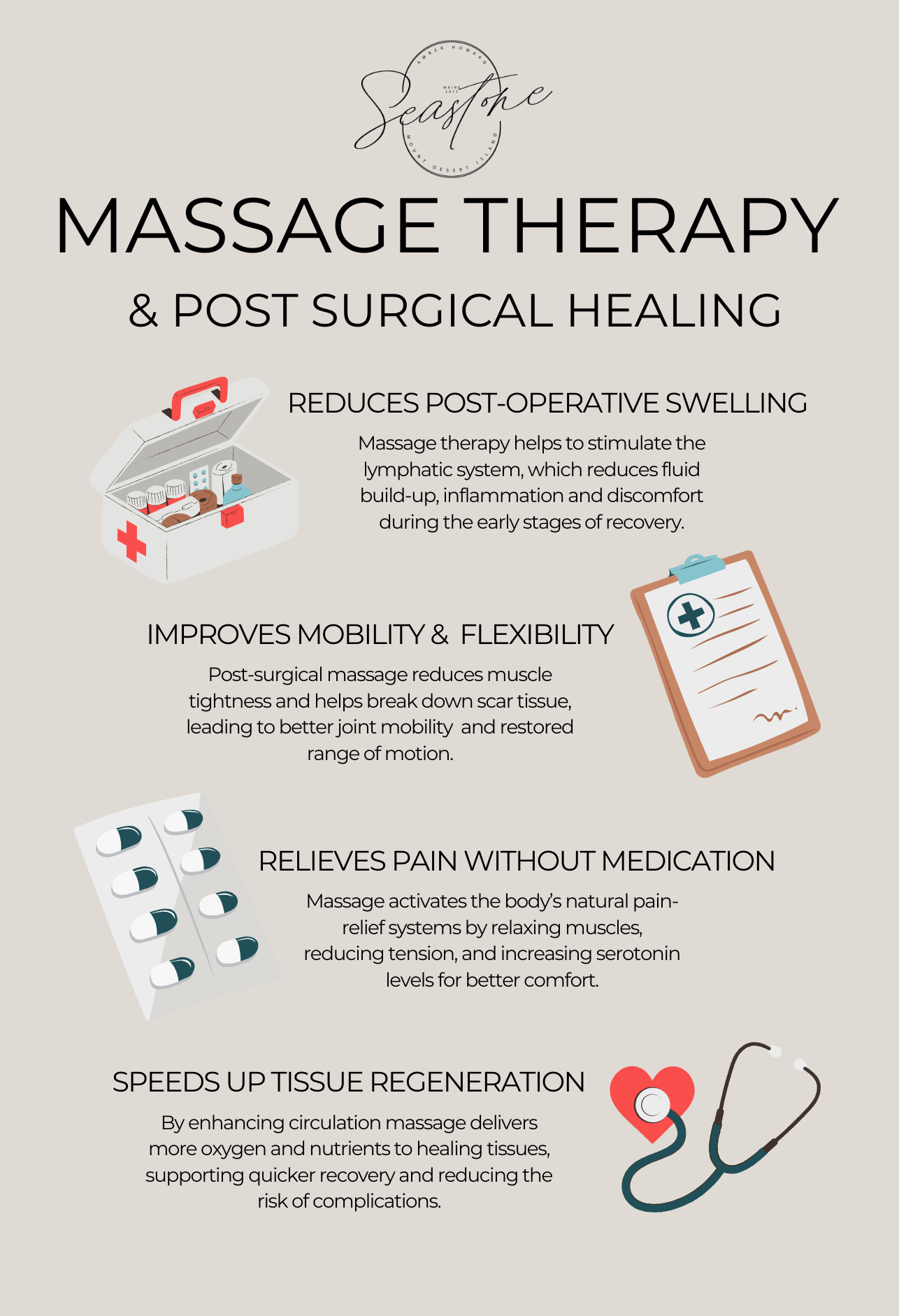
Yes, mild soreness after a therapeutic massage session is normal. It may feel similar to how your body feels after a workout. When it occurs, it typically lasts 24–48 hours and is a sign that your body is adapting to the changes in tissue mobility.
You should not experience sharp, severe, or worsening pain. If anything feels concerning, you are encouraged to reach out.
Aftercare Following Injury or Post-Operative Massage
Before you leave, we’ll talk through what your body may need next.
This may include:
Hydration
Gentle movement
Ice or heat recommendations
Temporary activity modifications
Specific self-massage techniques
Coordination with your physical therapist, if applicable
Therapeutic massage works best as part of a broader recovery plan. It’s not a one-time fix. It’s supportive care that helps improve mobility, decrease pain, and assist your body as it heals.
Massage Therapy for Injury Recovery in Bar Harbor, Maine
If you’ve been referred for massage therapy after an injury or surgery, you don’t need prior experience to benefit from it.
You don’t need to know what to ask for.
You just need to show up with your history and your questions.
From there, we can build a plan together.
If you’re in the Mount Desert Island or Bar Harbor area and are looking for therapeutic massage for injury recovery or post-operative care, you’re welcome to reach out to see if this is a good fit for your situation.